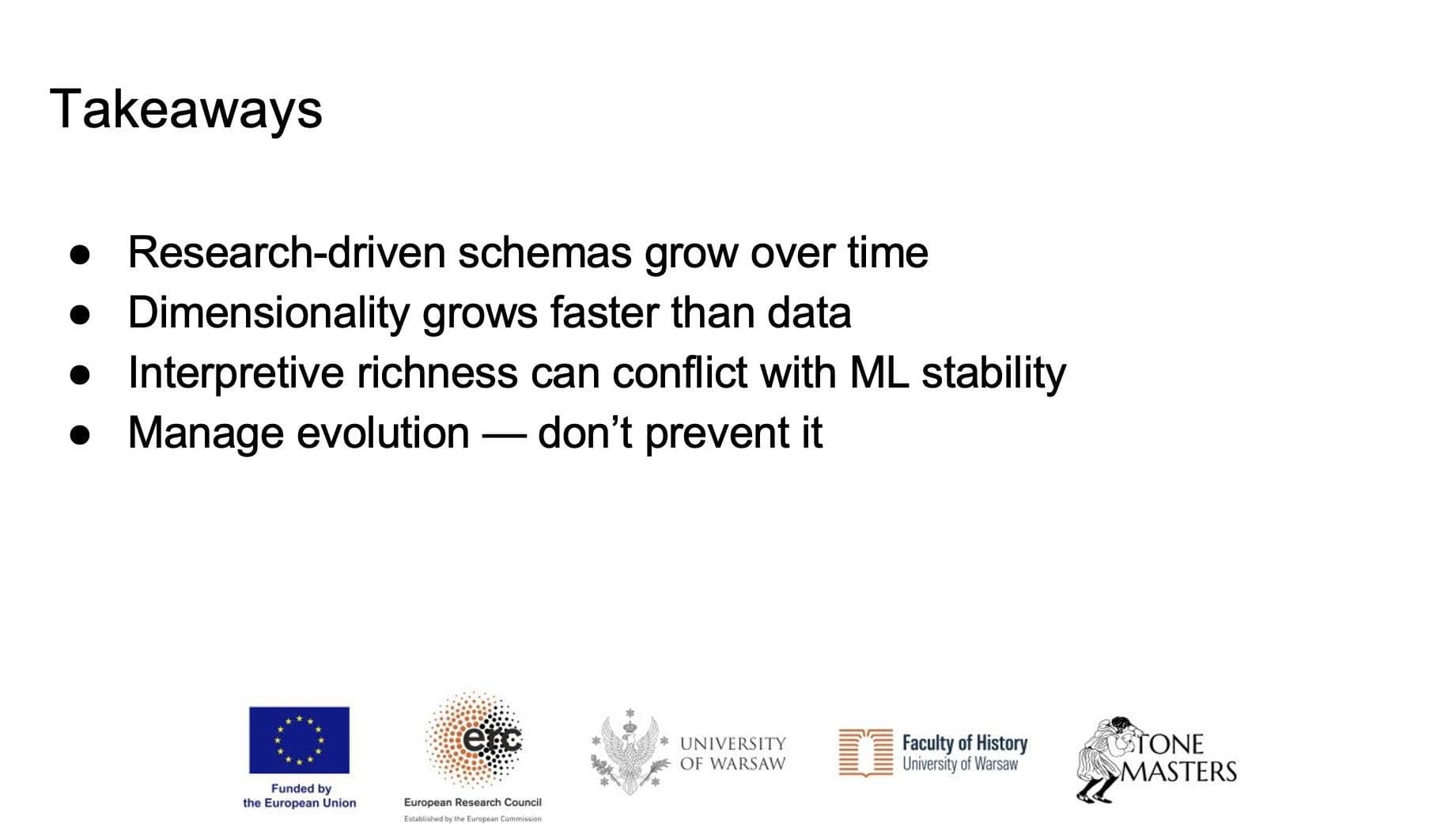
Maciek Krawczyk, who has programmed our Digital Atlas of Workshops, recently attended the CCA conference in digital humanities in Vienna. He gave there the paper "Natural Schema Evolution vs Machine Learning Readiness: A Case Study from the Stone-Masters Project," where he explored how the experience of programming the Atlas allowed him to get new insights into the problem of evolution of database schemas.
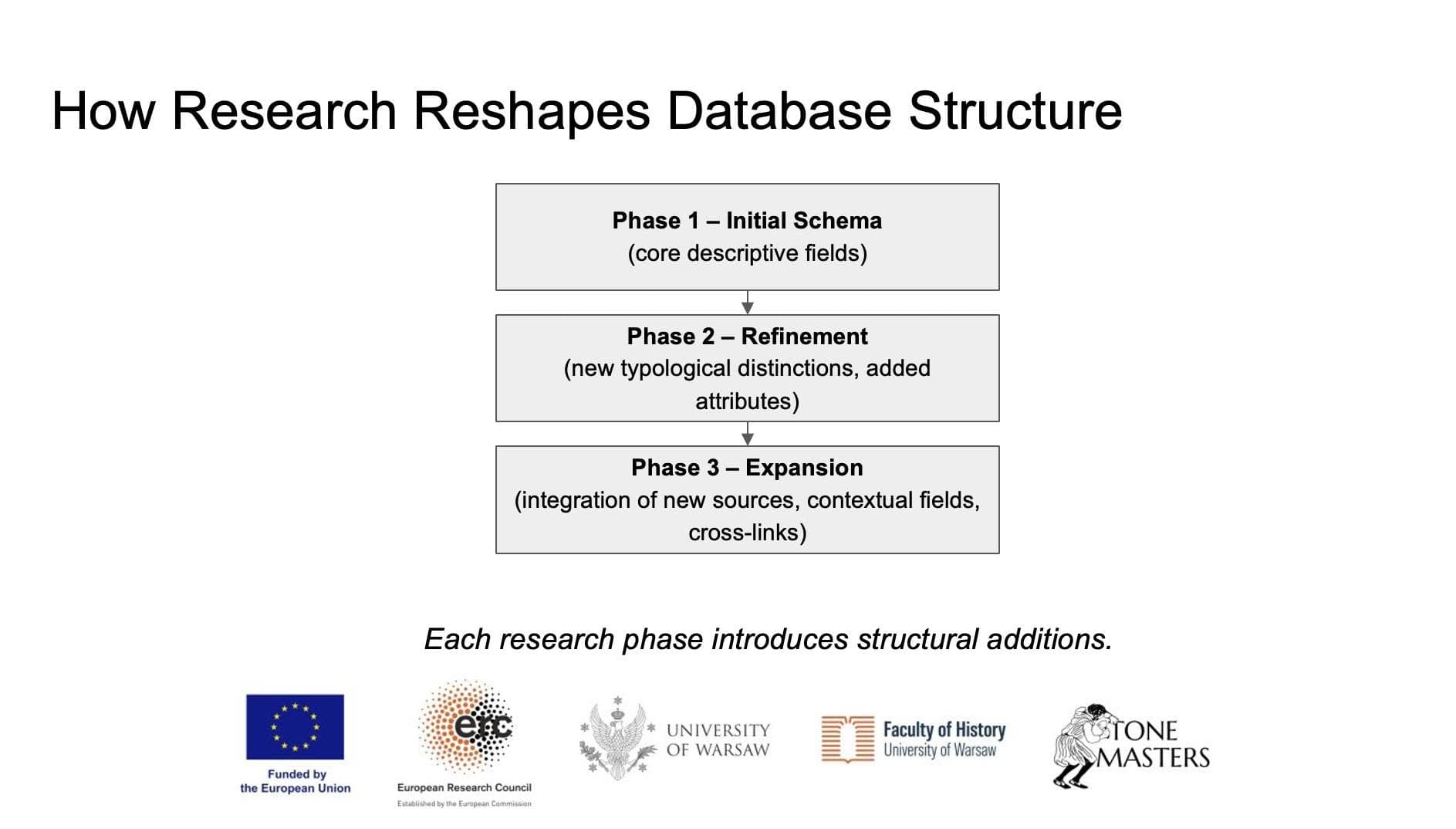
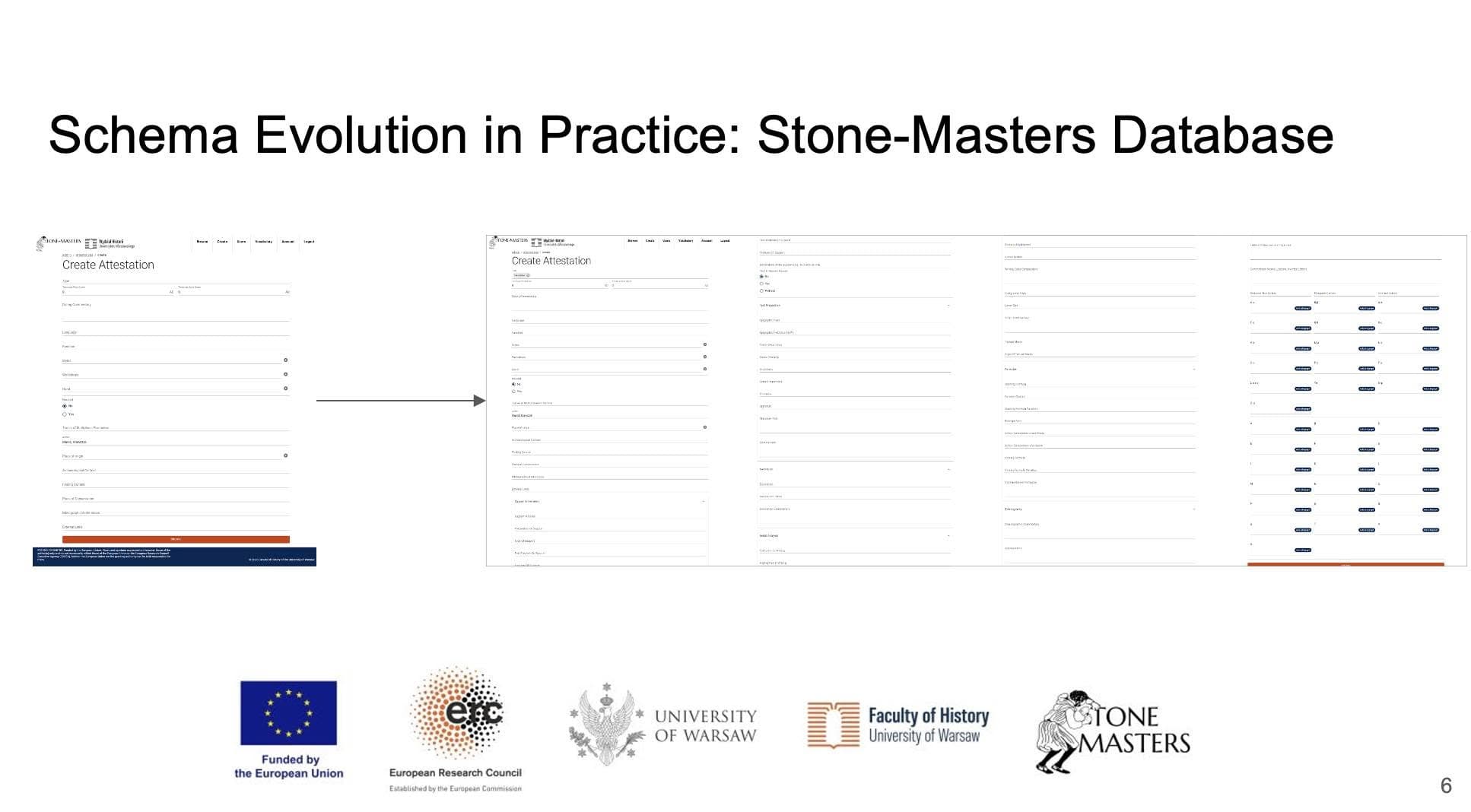
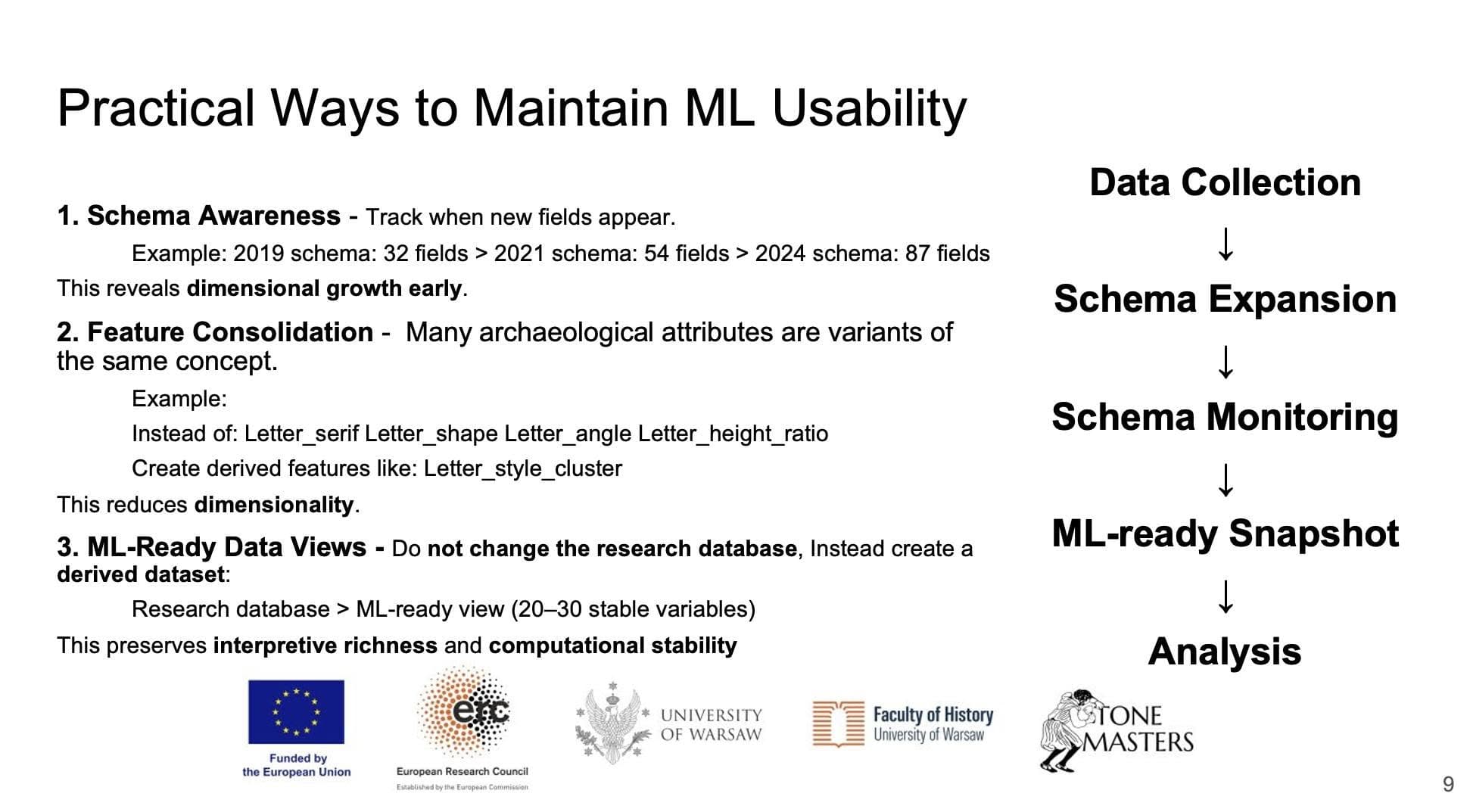
As he explains, most databases do not start large and complex.They begin quite simply — with a small set of fields designed to record the most important attributes of the material. But as the project develops, something very natural happens. New research questions appear. Typologies become more detailed. Additional datasets are integrated.And slowly, the schema begins to grow. After several years, the database often looks very different from what was originally designed. At the same time, it becomes harder for algorithms to identify stable and reliable patterns. As a result, analytical stability tends to decrease—not because the data are incorrect or poorly collected, but because they have become more expressive and more detailed. In other words, the dataset becomes increasingly powerful for human interpretation while simultaneously becoming more challenging for computational generalization.